Sustainability has moved from a nice-to-have to a commercial requirement across global supply chains. Businesses of all sizes are being asked to demonstrate how they manage their environmental impact, treat their workforce, and operate with integrity. EcoVadis has become one of the most widely used platforms for demonstrating that. This guide explains what EcoVadis is, how it works, and what it means for your business.
What is EcoVadis?
EcoVadis is a sustainability assessment platform that evaluates how well companies manage their environmental, social, and governance (ESG) responsibilities. Founded in 2007 and headquartered in Paris, it operates as a third-party service used by buyers and suppliers across global supply chains to measure, benchmark, and improve sustainability performance.
The purpose of EcoVadis
EcoVadis exists to bring transparency to supply chain sustainability. Rather than each buyer creating their own supplier questionnaire, EcoVadis provides a standardised framework that allows a company’s sustainability performance to be assessed once and shared with multiple customers. For suppliers, this means completing one credible assessment rather than responding to dozens of different buyer requests.
Who uses EcoVadis?
EcoVadis is used by over 130,000 companies across more than 180 countries. Its users fall into two categories:
- Buyers: large corporations and procurement teams that require their suppliers to complete an EcoVadis assessment as part of qualification, onboarding, or ongoing supplier management.
- Suppliers: manufacturers, service providers, logistics companies, construction firms, and SMEs that complete assessments to demonstrate their sustainability credentials to customers.
Why is EcoVadis important for businesses?
Growing demand for sustainable supply chains –
Global corporations are facing more pressure from regulators, investors, and consumers to demonstrate responsible supply chain management. This pressure flows directly to their suppliers. EcoVadis has become the most widely adopted tool for managing and communicating this, making it a practical requirement for suppliers who want to maintain and grow relationships with large buyers.
Benefits of having an EcoVadis rating
- Increased business opportunities – many buyers use EcoVadis ratings as a qualification threshold, meaning a rating opens doors that are otherwise closed.
- Enhanced reputation – a Silver, Gold, or Platinum medal signals to the market that your business manages sustainability seriously.
- Better risk management – the assessment process highlights gaps in your policies and systems before they become operational or legal issues.
- Improved ESG performance – companies that engage with EcoVadis consistently improve their sustainability management over time.
Why do large organisations request EcoVadis assessments?
Large corporations request EcoVadis assessments from suppliers to qualify them against minimum sustainability standards, demonstrate compliance with their own ESG commitments, meet regulatory requirements around supply chain due diligence, and report on the sustainability performance of their supplier base to shareholders and regulators.
How does the EcoVadis assessment work?
Step 1 – company registration
The process begins when a buyer sends a supplier an invitation to complete an EcoVadis assessment, or when a supplier registers directly on the platform. You create a company account and provide basic business information including your industry, size, and geographic location. This information determines which version of the questionnaire you receive.
Step 2 – completing the questionnaire
The EcoVadis questionnaire is tailored to your industry and company size. It covers your policies, actions, and results across four sustainability themes. Questions are weighted based on the relevance of each issue to your specific sector. For example, an environmental question about chemical management carries more weight for a manufacturer than for a consultancy.
Step 3 – uploading supporting documents
Alongside the questionnaire, you upload documents that support your answers. These include sustainability policies, ISO certificates, HSE records, training logs, audit reports, and environmental performance data. EcoVadis analysts cross-reference your answers with these documents and responses without supporting evidence carry much less weight in the final score.
Step 4 – expert analysis and review
Once submitted, your questionnaire and documents are reviewed by EcoVadis analysts who are sustainability professionals with sector-specific expertise. They validate the evidence provided, assess the quality and maturity of your sustainability management, and apply the EcoVadis scoring methodology to produce your result. This process typically takes three to four weeks.
Step 5 – receiving your scorecard
You receive a detailed scorecard showing your overall score, your performance across each of the four themes, and specific areas identified for improvement. The scorecard can be shared with any buyers who have requested your assessment, and is valid for 12 months before renewal is required.
What does EcoVadis evaluate?
Environmental Performance
This theme covers how your business manages its environmental footprint including energy consumption and efficiency, carbon emissions and climate-related actions, waste generation and disposal, water use, biodiversity, and the use of hazardous materials. It looks at both policies and actual performance data.
Labour and Human Rights
This theme assesses working conditions, health and safety management, employee wellbeing, diversity and inclusion practices, and human rights, including freedom of association and the absence of forced or child labour.
Ethics
The ethics theme evaluates anti-corruption measures, business integrity, whistleblowing mechanisms, and data protection practices. It assesses whether your business has clear policies against bribery and corruption, whether those policies are communicated, and whether there are channels for employees or third parties to report concerns.
Sustainable Procurement
This theme looks at how your business manages sustainability in its own supply chain, whether you have a supplier code of conduct, how you screen or assess suppliers on ESG criteria, and whether sustainability considerations are embedded in your procurement decisions. This is often the most overlooked theme, but it is fully weighted in your overall score.
Understanding the EcoVadis scoring system
How are scores calculated?
Each of the four themes is scored individually out of 100, and a weighted overall score is calculated based on industry and company size. The weighting reflects the materiality of each issue to your sector. Environmental issues carry more weight for manufacturers, while ethics may be weighted more heavily for financial or professional services businesses.
EcoVadis score range explained
Scores run from 0 to 100. Rather than the raw score, the medal level is what most buyers and procurement teams focus on, and the thresholds between medals matter greatly. A score of 54 is Bronze; a score of 55 is Silver. That single point can be the difference between meeting a buyer’s minimum requirement and falling short.
Factors that influence your score
- Policy quality – are your sustainability policies comprehensive, current, and signed by senior management?
- Implementation evidence – can you demonstrate that policies are being acted on through training records, audits, and operational data?
- Results and reporting – do you track and report measurable sustainability outcomes, and can you show improvement over time?
EcoVadis medal levels explained
Bronze medal
Bronze places a company in the top 50% of all assessed businesses. It indicates that basic sustainability systems are in place, written policies and some evidence of implementation, but that gaps remain. For many buyers, Bronze is the minimum threshold to remain on an approved supplier list.
Silver medal
Silver places a company in the top 25%. It signals a structured, documented approach to sustainability with policies supported by action plans, training records, and measurable outcomes. Silver is increasingly the preferred standard for suppliers to large regional and global corporations, particularly in the UAE and GCC.
Gold medal
Gold places a company in the top 5%, a strong differentiator in competitive procurement processes. It requires quantitative performance data, formal targets, evidence of continuous improvement, and typically third-party certifications such as ISO 14001 or ISO 45001.
Platinum medal
Platinum is awarded to the top 1% of assessed companies globally. It represents industry-leading sustainability performance with sustainability embedded into strategy, governance, and supply chain management, and measurable improvement demonstrated year-on-year.
The medal level is the primary signal buyers use when evaluating suppliers. It determines whether you meet qualification thresholds, how you compare against competitors in tender evaluations, and whether your sustainability performance is improving or stagnating over time.
Is EcoVadis a certification?
EcoVadis vs certification programmes
EcoVadis is a rating, not a certification. A certification such as ISO 14001 or ISO 45001 is awarded following a physical or remote audit by an accredited third-party body and confirms that your management system meets the requirements of a specific standard. EcoVadis is a scored assessment based on document review and questionnaire analysis, not an independent audit.
Differences between EcoVadis and ISO standards
ISO standards such as ISO 14001 (environmental management) and ISO 45001 (health and safety) focus on whether a specific management system is in place and functioning. EcoVadis takes a broader view across four themes and scores the overall maturity of sustainability management rather than compliance with a single system. Importantly, holding ISO certifications is valuable evidence within an EcoVadis assessment, the two are complementary, not competing.
Both EcoVadis and ISO certifications are requested by buyers as evidence of sustainability performance, which leads to confusion about their respective roles. The simplest way to think about it is; ISO certifications verify that specific management systems meet a defined standard; EcoVadis rates the overall quality of your sustainability management across multiple dimensions.
Who needs an EcoVadis rating?
Manufacturers and industrial companies
Manufacturers supplying to global brands, retailers, or industrial buyers are among the most frequent recipients of EcoVadis requests. Environmental performance such as energy, emissions, chemicals, and waste is weighted heavily for this sector.
Construction and infrastructure firms
Construction contractors and materials suppliers are increasingly required to demonstrate ESG credentials, particularly on projects with international ownership, green building targets, or government procurement requirements.
Logistics and transportation providers
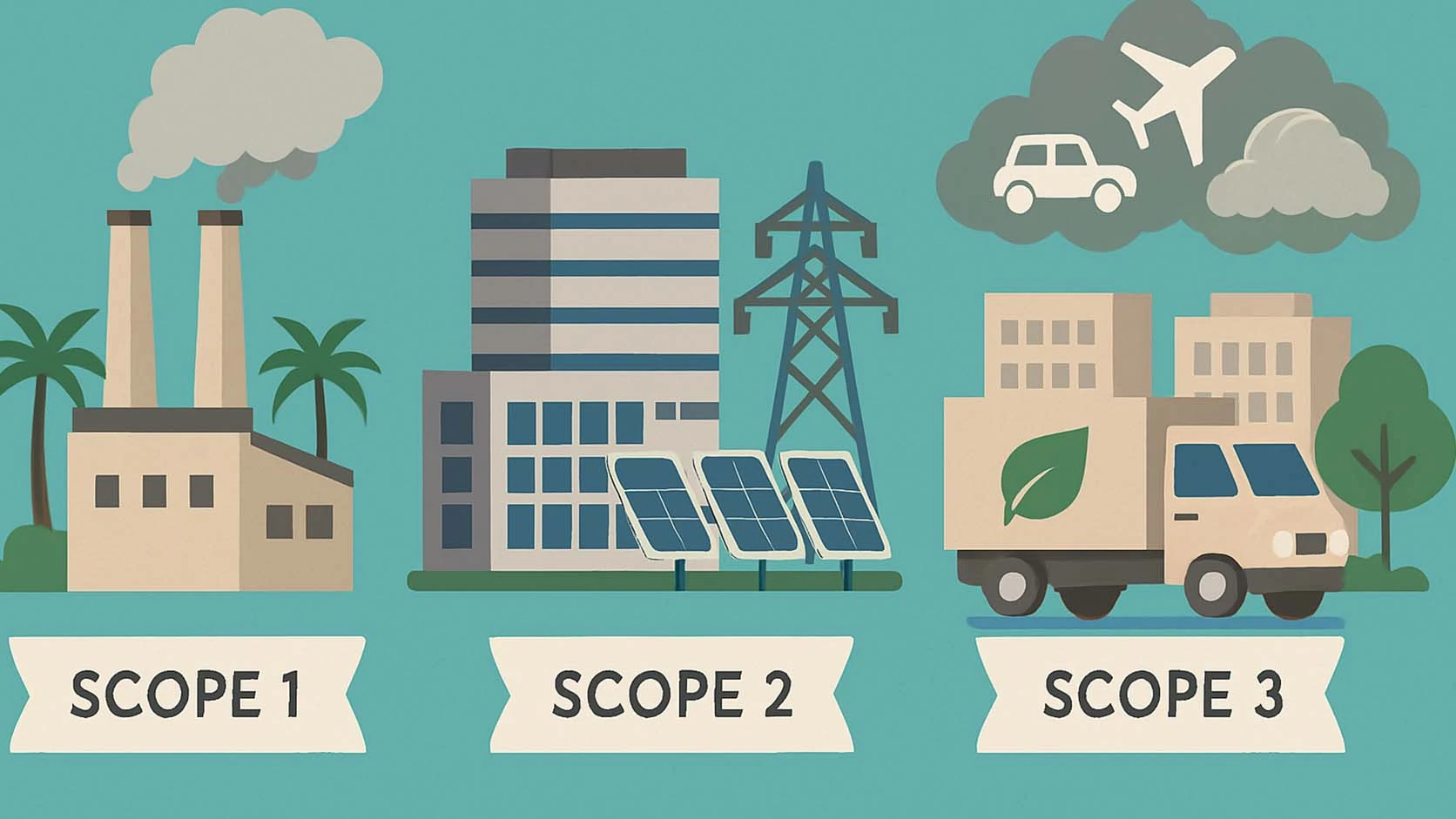
Logistics providers are under growing pressure to report carbon emissions data as part of their customers’ Scope 3 carbon reporting. EcoVadis is used in this sector alongside direct carbon footprint reporting.
Professional service companies
Legal, consulting, technology, and facilities management businesses supplying to multinationals are asked for EcoVadis ratings as part of supplier due diligence even where the environmental footprint of the business itself is relatively small.
SMEs working with large corporations
EcoVadis is not just for large companies. SMEs that supply to corporate buyers in any sector are also among the most common users of the platform. The assessment is designed to be proportionate to company size, and a well-prepared SME can achieve a strong score without a dedicated sustainability team.
Common challenges companies face during EcoVadis assessments
Lack of sustainability documentation
Many businesses have good sustainability practices in place but have never documented them formally. Without written policies and supporting records, practices that exist in daily operations are invisible to EcoVadis analysts.
Incomplete ESG policies
Generic or undated policies that do not reflect the actual business or that have not been reviewed and signed by senior management score poorly regardless of how strong the underlying sustainability management is.
Poor data collection and reporting
EcoVadis expects results not just policies and actions. Companies that do not track energy use, waste volumes, incident rates, or training completion struggle to score well on the results component of the assessment.
Weak supplier sustainability management
The Sustainable Procurement theme can get neglected during preparation. Many companies focus exclusively on their own operations and give little attention to how they manage sustainability in their supply chain, leaving points on the table unnecessarily.
Limited internal awareness
EcoVadis assessments require input from multiple parts of the business such as operations, HR, procurement, and finance. Companies that treat it as a task for one person often miss evidence that exists elsewhere in the organisation.
How to improve your EcoVadis score
Develop strong sustainability policies
Ensure you have current, signed policies covering environment, health and safety, ethics, and sustainable procurement. Each should be specific to your business, reviewed regularly, and communicated to staff.
Strengthen ESG reporting rrocesses
Start tracking sustainability performance data such as energy consumption, waste, incidents, training completion on a regular basis. Year-on-year data demonstrating improvement is one of the strongest signals you can send to EcoVadis analysts.
Implement employee training programmes
Training records showing that staff have been made aware of your sustainability policies and practices contribute meaningfully to the implementation component of your score. Keep attendance records and make training a regular part of onboarding and operations.
Improve supply chain due diligence
Introduce a supplier code of conduct and communicate it to your key suppliers. Even basic supplier screening processes and procurement policy language referencing sustainability will improve your Sustainable Procurement score.
Maintain clear documentation and evidence
Build a document library that is organised, current, and ready to upload at assessment time. Every strong answer in the questionnaire should be matched with a supporting document.
Monitor and review performance regularly
Treat EcoVadis as an ongoing management system rather than an annual event. Review your scorecard in detail after each assessment, address the gaps identified, and track your improvement actions throughout the year.
EcoVadis for UAE businesses
The UAE’s position as a global trade hub means that local businesses are embedded in international supply chains and subject to the sustainability requirements those chains impose. At the same time, the UAE’s own regulatory environment is tightening, with Federal Decree-Law No. 11 of 2024 introducing mandatory carbon reporting and a growing emphasis on ESG in government procurement.
Supplier requirements from international buyers
Multinationals operating in the UAE across construction, logistics, manufacturing, and professional services are extending their global supplier sustainability requirements to their UAE supply chains. EcoVadis assessments are among the most common tools used to manage this, and UAE suppliers without a rating are finding themselves at a disadvantage in competitive procurement processes.
ESG trends driving adoption across the UAE
The UAE’s Net Zero 2050 target, the growth of green finance, and the increasing integration of ESG criteria into government and semi-government procurement are all driving broader adoption of sustainability frameworks including EcoVadis. Businesses that build their sustainability credentials now will be better positioned as requirements tighten further.
Preparing for future sustainability requirements
EcoVadis preparation and good sustainability management are not just about today’s requirements, they build the foundation for whatever comes next. Companies that have strong policies, data systems, and internal processes in place will adapt far more easily to new regulations and customer requirements than those starting from scratch.
Conclusion
EcoVadis has become a standard part of how global supply chains manage and communicate sustainability performance. For UAE businesses, whether you are a manufacturer, a logistics provider, a construction contractor, or a professional services firm, understanding what EcoVadis is and how to perform well on it is important for maintaining and growing commercial relationships.
The good news is that a strong EcoVadis score is achievable without a large sustainability team or significant budget. It requires clear policies, consistent implementation, good documentation, and a structured approach to preparation.
Kaynat Advisory helps UAE businesses prepare for EcoVadis assessments, improve their scores at renewal, and build the sustainability systems that underpin long-term performance. Contact us at info@kaynatadvisory.com or call +971 50 907 8152 for a free initial consultation.